

SSC attorneys Michael Chapnick and Steve Geller, who also serves as Broward County Mayor, discuss the final proposed recommendations by the Broward Committee on Building Safety.
561-994-4499

EXPERIENCED LAWYERS & PROFESSIONAL LEGAL SOLUTIONS
Commercial Litigation & Appeals | Community Association Law
Estate Planning, Trust & Probate Administration
Real Estate, Corporate & Land Use | Governmental & Lobbying
COMMERCIAL LITIGATION & APPEALS
• Trial & appellate representation
• Business litigation & construction law
• Labor & employment
• Insurance defense & medical malpractice
STATE & FEDERAL
COMMUNITY ASSOCIATION LAW
• Dedicated & experienced HOA attorney team
• Collections & statutory and regulatory compliance
• Condo & homeowners associations & country club boards
GROUNDBREAKING CASES IN FLORIDA

REAL ESTATE, CORPORATE AND LAND USE
• Representing developers, lenders & government agencies in acquisition,
development, leasing & financing of commercial, residential, mixed-use
and public projects
• Legal guidance through loan foreclosures, and workouts of distressed
commercial properties, land, and planned unit developments
ZONING & PERMITTING, DUE DILIGENCE
A Boca Raton Law Firm | HOA Attorneys, Business Litigation,
and Real Estate Transactions
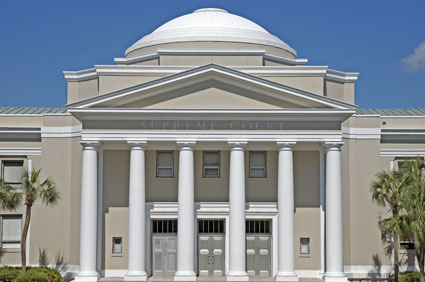
Commercial Litigation & Appeals
Representing governmental entities, individuals, for-profit and not-for-profit corporations, our litigation attorneys have extensive civil litigation and trial experience in both state and federal courts.
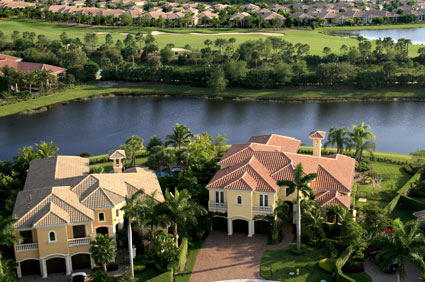
Community Association Law
Representing condominium associations, homeowners associations, country clubs, cooperatives, developers, financial institutions and individuals in the creation of and governance of these organizations.

Estate Planning, Trust & Probate Administration
The Estate Planning, Trust & Probate Administration Practice Group offers personal tax planning and advice to assist clients with the preservation of wealth and transfers to succeeding generations.
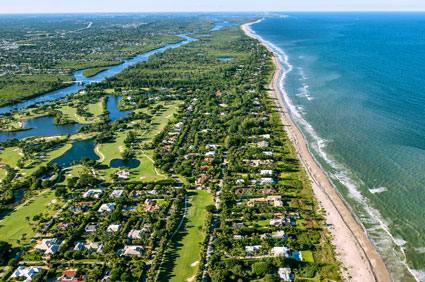
Real Estate, Corporate &
Land Use
Representing buyers, sellers, investors, developers, lenders, architects, engineers, contractors, landlords and tenants in commercial, industrial and residential real estate and financing transactions.
With greater attention being given to building safety, the City of Boca Raton has implemented a Building Recertification Inspection Program. The City Council passed Ordinance 5589 at its August 24, 2021 meeting. The new ordinance will require inspection and recertification of buildings that are 30 years and older. Additional recertification will be required every 10 years. This requirement applies to buildings that are greater than three stories in height and to buildings that are greater than 5,000 square feet with an occupancy of greater than 500 persons. Single-family homes and duplexes are exempted. 242 buildings currently meet the criteria for the recertification requirement, and the City will begin inspections of these buildings on a proposed four-year schedule with the buildings divided into four zones based on geographic location. The recertification process will include the submittal of an engineering/inspection report, review by the City’s Building Official, and implementation of a Repair Plan as required. Impacted buildings will be notified by the City at least a year before the deadline. Should you wish to discuss the impact of the foregoing on your building, please do not hesitate to call us.
I’m Steve Geller, and I’m Of-Counsel to Sachs Sax Caplan. I’m an “A-V Preeminent” Lawyer, listed in both “Florida’s Best Lawyers”, “South Florida Super Lawyers”, etc. I’ve been practicing law for 39 years, and when I’m not practicing law, I’m also a politician. I served in the Florida House and Senate for 20 years, including serving as the Senate Minority (Democratic) Leader, and I’m currently a Broward County Commissioner and Mayor of Broward County. As Mayor, after the collapse of the Champlain Towers South Condominium in Miami-Dade County, I created and appointed the “Broward County Condominium Structural Issues Committee”, to study the issues involving Condominium living and safety. This Committee consisted of 16 members. I served as Chair. Other members included two State Senators, two State Representatives, two Mayors, three City Commissioners, representatives of condominium associations, engineers, attorneys, (including SSC’s own Michael Chapnick, Board Certified in Condominium and Planned Development Law), etc. All three City Commissioners were experts in Condominium issues. The Committee met for over 26 hours, and heard expert testimony from 12 speakers, including engineers, attorneys, insurance experts, an environmental expert testifying on the impact of sea level rise on condominiums, etc. The Committee also took public testimony. The Committee spent hours debating issues and reached recommendations that I wanted to share with you. There was extensive testimony about the inherent tension which sometimes exist between unit owners and a Condominium Board relating to expenditures. Many condominium residents, particularly seniors, don’t want to or feel that they can’t pay for proper maintenance or for reserves, which are moneys set aside for large future expenditures. For example, if you know that you’re going to need a new roof in 15 years, you should be setting aside one fifteenth of that money each year. Florida law requires that this money be set aside, but also permits the unit owners to waive the reserves by a majority vote. There was extensive testimony that better maintenance would be far more cost effective than having to replace structural support later. The Committee recommended that in order to...
Peter S. Sachs explains potential exemptions to the President's vaccine mandate for businesses. Watch the video from WPTV below. Source: https://www.wptv.com/coronavirus/president-biden-unveils-his-new-strategy-to-combat-covid
As we have previously discussed, during the COVID-19 pandemic, the Federal Government issued moratoriums on residential evictions as well as foreclosures. These were enacted in order to protect the public health and prevent an overwhelming number of people becoming homeless, or to protect those struggling with the affects of the pandemic. Earlier this month, the foreclosure moratorium, after several renewals, lapsed. However, the Federal Government has, once again, extended the moratorium on residential evictions. However, in so doing, they have added some limitations to its applicability. The order says “a landowner, owner of a residential property, or other person with a legal right to pursue eviction or possessory action, shall not evict any covered person from any residential property in any county or U.S. territory while the county or territory is experiencing substantial or high levels of community transmission of SARS-CoV-2.” The order goes on to define a covered person, in pertinent part, as a tenant or other person in possession who provides their landlord with a declaration under the penalty of perjury that (i) the individual has used his best efforts to obtain governmental assistance for rental or housing; (ii) they earned less than $99,000 (or $198,000 if filing jointly) in 2020, or expects to learn less in 2021; (iii) the individual is unable to pay rent due to loss of income; (iv) the individual is using best efforts to make timely partial payments as best they can; (v) eviction would render the individual homeless; and (vi) the individual lives in an area with substantial or high rates of community transmission. Again, it is worth noting that the moratorium on foreclosures has lapsed, and thus foreclosures are legally permitted to proceed. Should you need to discuss the impact of the foregoing on your Association, please do not hesitate to call us. Daniel Weber, Esq.
Florida Statute 718.303, which governs condominium associations, is titled “Obligations of owners and occupants; remedies.” Section 718.303(1) grants condominium associations and unit owners the power to file certain actions against: (1) an association; (2) a unit owner; (3) directors; and/or (4) tenants or other invitees occupying a unit. Until June 30, 2021, Section 718.303(1) applied to “[a]ctions for damages or for injunctive relief, or both, for failure to comply” with Chapter 718, Florida Statutes, and/or a condominium’s governing documents. However, effective July 1, 2021, the Florida Legislature amended Section 718.303(1), by replacing “[a]ctions for damages or for injunctive relief” with the broader language of actions “at law or in equity.” Under Florida law, each party is responsible for their own attorneys’ fees absent a contract or statute stating otherwise. Importantly, Section 718.303(1) provides that the prevailing party in such actions is entitled to recover attorney’s fees from the non-prevailing party. Thus, prior to the amendment of Section 718.303(1), a prevailing party in an action for damages or for injunctive relief under that statute was entitled to attorney’s fees. But now prevailing parties are entitled to an award of attorney’s fees in actions at law or in equity, or both relating to the failure to comply with Chapter 718 or the governing documents. Declaratory judgment actions are common causes of action raised in Chapter 718 proceedings. For this action, a plaintiff usually maintains that declaratory relief is needed on an issue where there is uncertainty as it relates to the parties’ rights, duties, and status. Declaratory relief is neither damages nor injunctive relief. Thus, a prevailing party under the prior version of Section 718.303(1) would not have been entitled to recover attorney’s fees from the non-prevailing party. For example, in Angelo’s Aggregate Materials, Ltd. v. Pasco Cty., 118 So. 3d 971, 975 (Fla. 2d DCA 2013), the appellate court construed “damages or injunctive relief” expressed in a county ordinance “to apply only to damages and injunctions and not to declaratory actions.” But now Section 718.303(1) specifies actions “at law or in equity,” and...
Given the heightened awareness of issues pertaining to the structural integrity of Florida coastal and non-coastal buildings in the wake of the Surfside tragedy, it is important to understand the 40-year building certification process currently in force in Miami-Dade and Broward counties. Both Miami-Dade and Broward Counties require that, unless exempted, buildings greater than a designated square footage (2000 square feet for Miami-Dade County, and 3500 square feet for Broward County) be inspected for structural integrity and electrical safety issues forty years after the date of original construction, and thereafter, every ten years. While Palm Beach County does not presently require such inspections, the counties and cities in Palm Beach are in the process of reviewing these issues, and requirements similar to those of Miami-Dade and Broward Counties may be implemented in the near future. Each June in Broward County, a list of buildings requiring inspection is prepared and sent to the various cities in the county. Those cities then send out notices of inspection to the buildings and provide them with ninety days within which to obtain structural integrity and electrical safety inspections from a licensed engineer or architect, and to submit their report to the city’s building officials. If structural and/or electrical defects are identified, which may pose an immediate threat to life safety, those repairs must be completed within one hundred eighty days from the date of the building inspection report. In Florida, condominium associations have several options available to fund the cost of repairs identified by the engineer or architect’s report, including reserves, special assessments, and/or bank loans or lines of credit. First and foremost, the use of reserve funds should be explored. Section 718.112, Fla. Stat., provides that a condominium association’s budget “must include reserve accounts for capital expenditures and deferred maintenance. These accounts must include, but are not limited to, roof replacement, building painting, and pavement resurfacing, regardless of the amount of deferred maintenance expense or replacement cost, and any other item that has a deferred maintenance expense or replacement cost that exceeds $10,000. The amount to be reserved must be computed...
July 29, 2021 - Principal Attorney Brett A. Duker has been conferred the status of Board Certified in Construction Law by the Florida Bar. Duker is one of seventy six attorneys in the state to earn Florida Bar board certification, which recognizes attorneys’ special knowledge, skills, and proficiency in various areas of law and professionalism and ethics in practice. Board certified lawyers are “Evaluated for Professionalism and Tested for Expertise.” Florida’s legal ranks currently feature over 5,000 board-certified attorneys, offering expertise in 27 areas of law. With just one in 20 Florida Bar members able to call themselves “board certified,” it clearly is a crucial component in the career of any attorney looking to emerge from the crowd. As the legal landscape grows increasingly competitive, board certified lawyers are able to use their status to set themselves apart from peers. And a growing number of Bar members are exploring board certification to help stand out in what they see as a crowded landscape. Minimum standards for construction law certification, provided in Rule 6-24.3, include: Practice of law for at least five years;Substantial involvement in the specialty of construction law – 40% or more – during the three years immediately preceding application;45 hours of approved construction law certification continuing legal education in the three years immediately preceding application;Peer review; and,A written examination. Congratulations Brett! Visit the Florida Bar website to see a full list of individuals who are now board certified: https://www.floridabar.org/the-florida-bar-news/76-florida-lawyers-earn-board-certification/
The continued reporting concerning the causes of the collapse of the Champlain Towers South in Surfside, Florida, is placing a new spotlight on the complex principles associated with condominiums in south Florida. The outcome involving this local tragedy will be shaped by how we move forward. For a baseline, let us talk about the most gripping engineering disaster in the United States before the catastrophe of the Champlain: the Hyatt collapse of the suspended hallways in Kansas City, Missouri hotel on July 17, 1981. Not often mentioned, having happened 40 years ago, it is instructive as to what is now likely to unfold. The Hyatt Company during that time had made a name that was associated with architectural wizardry in hotel design. The K.C. Hyatt opened on July 1, 1980. Within the multi-story atrium in the flagship hotel, there were suspended open walkways, held in place by steel hangar rods. On the evening of July 17, 1981, just a little over a year after the opening, during a particularly crowded event attend by 1600 people, the fourth-floor walkway collapsed and in the cascade of additional damage, 114 people died and over 200 were injured. The Champlain is on the verge of exceeding that death toll. Like the Champlain, it became the center of riveting media coverage with the last rescue being made nine hours after the initial structural failure and people losing limbs as they had to be cut from the wreckage. Interestingly, the Champlain was finished at about the same time, in 1981. It has been observed that in its forty-year history, it survived hurricanes. Regardless, it was also reported that the building’s structural integrity was suspect, with the degradation of reinforced concrete support structures due to corrosion of the reinforcing steel, often referred to as “rebar”. Mention has also been made of a cause related to the improper original installation of the rebar. It will take some time to sort this out. The Hyatt disaster was not fully explained until May 1982, almost a year later, in an article under the guidance of the National...
As we begin to move past the Covid-19 Pandemic, and all of the significant hurdles that community associations faced as a result, one of the silver linings is the nearly universal acceptance of technology to conduct regular business. Specifically, with respect to community associations, many associations had no choice but to learn how to conduct its meetings virtually through Zoom or similar platforms. At the time, although the law did not specifically contemplate conducting meetings in such a way, most practitioners agreed that conducting both board and membership meetings virtually was acceptable. Some of that guidance was based upon the powers afforded to community associations under their respective emergency powers statutes of §718.1265 or §720.316, Florida Statutes. However, as we move beyond the declared state of emergency, and the likely expiration of statutory emergency powers, the question remains, may community associations continue to conduct meetings, both board and membership, virtually? Section 718.112(2)(c), Florida Statutes, governs board of directors meetings for condominiums and provides, in pertinent part: “Meetings of the board of administration at which a quorum of the members is present are open to all unit owners. Members of the board of administration may use e-mail as a means of communication but may not cast a vote on an association matter via e-mail. A unit owner may tape record or videotape the meetings. The right to attend such meetings includes the right to speak at such meetings with reference to all designated agenda items.” Additionally, §718.112(2)(b)5, Florida Statutes provides that: “A board or committee member’s participation in a meeting via telephone, real-time videoconferencing, or similar real-time electronic or video communication counts toward a quorum, and such member may vote as if physically present. A speaker must be used so that the conversation of such members may be heard by the board or committee members attending in person as well as by any unit owners present at a meeting.” Likewise, §617.0820, Florida Statutes, which governs all not-for-profit corporations, allows the board, so long as the governing documents do not provide otherwise, to conduct the meeting through any means...
BOCA RATON, Fla. - Efforts at the site of the Surfside condominium collapse have shifted from rescue to recovery after two weeks of searching for survivors. At the time of this article, 64 people have been recovered from the rubble. Another 76 remain unaccounted for. This tragedy has raised questions about the safety of high-rise condominium buildings, especially waterfront properties. While the cause of the collapse has not been determined and likely won't be for months, many experts are pointing fingers at the lack of inspection requirements for not catching concerning infrastructure issues sooner. In Miami-Dade County, building re-inspections are only due every 40 years. There is no mandate for building inspections or re-inspections across the state, meaning it's up to building owners and property management teams to conduct inspections when they decide it's necessary. Florida law firm Sachs Sax Caplan, known for leading in the field of condominium law, thinks the state should create guidelines and regulations for building construction and inspections. The firm wrote a letter to Governor Ron DeSantis' office, asking him to create an expert task force to establish statewide standards for building inspections and re-inspections to protect life and safety. "It could really create an opportunity to have one of the positive legacies of this terrible experience be one of saving lives where we create an opportunity to have safer buildings so people can sleep at night," said Louis Caplan, a founding partner at Sachs Sax Caplan and an expert in community association law. Caplan says the recommendation is for the state to put together a team of engineers, architects, contractors and other industry experts that could help create guidelines for the type of materials used in new construction, the frequency of inspections and disclosure requirements to unit buyers at the state level. Caplan says his firm has gotten confirmation that their letter was received by the governor's office, but has not gotten any feedback about their proposal. The last time Florida created statewide building code changes was after Hurricane Andrew destroyed more than 25,000 homes in 1992. The building codes mandated by the state...
Statutory Update for Condominiums, Cooperatives and Homeowners Associations. The following is a summary of recent changes to the Florida Statutes relating to Condominiums, Cooperatives and Homeowners Associations. It should be noted that this handout is a summary in nature and has been compiled to identify provisions which are of extra importance to our community association clients. On the other hand, because it is summary in nature, this handout should not be relied upon as a definitive guide for any Association. We suggest you review the actual statutory language or contact your Association attorney with specific questions. See the document below for the full update. Download PDF File Here
(CNN)An independent budget review warned the Champlain Towers South condo association that its financial reserves were critically underfunded in the face of urgently needed structural repairs a little over a year before the building collapsed, a document obtained by CNN shows. The condo association only had 6.9% of the recommended level of money to complete repair and replacement projects and stay financially secure, according to a March 2020 report from Association Reserves, a company that analyzes housing association finances. The report said that various components of the Surfside, Florida, building had zero years of "remaining useful life." Those included the entrance and garage -- where some experts believe concrete cracking may have contributed to last month's deadly collapse. The study, which has not been previously reported, underscores how squabbling over assessments and underfunded reserves brought the repair situation at Champlain Towers South to a head.The association was projected to have a little over $706,000 in its reserves as of January 2021, according to the report, while Association Reserves recommended it stockpile nearly $10.3 million to account for necessary repairs. Based on that gap, the report found that the Champlain South board was at "high risk" of "special assessments & deferred maintenance." About a year after receiving the report, the board moved in April 2021 to levy a $15 million special assessment on condo owners to raise money needed for repairs. Robert Nordlund, the founder and CEO of Association Reserves, told CNN in an interview that about three out of 10 condo associations nationwide that his company reviews are at high risk, with less than 30% of the recommended reserves. He said the report showed the importance of condo associations stockpiling enough money to conduct regular repairs. "I just wish they had hired us five years or 10 years or 20 years prior," he said of the Champlain South condo board. The board had never previously received a reserve budget study, according to a separate PowerPoint presentation to residents from November 2020. The presentation alluded to the contentious debates among owners about the big-ticket items. "Complaining Or Shouting At Each Other Doesn't Work!"...
Some might say it’s too soon. Too soon to talk politics and policy, when the search, rescue and recovery operations at the Surfside Champlain Towers South condominium collapse disaster are still tragically unfolding before our eyes. But this is exactly the time to discuss what we can do to guarantee this kind of disaster never happens again – when the unbearable grief is hardest to see, when the potential death toll is the hardest to comprehend. Let’s be clear: 40-year-old buildings in the United States should never simply collapse. Period. And we shouldn’t wait another moment before finding and embracing commonsense policies that make sure that is true. In Florida, where our edifices are under constant attack – from salt, sand, water, storms, lightning, winds, surge, and more – the most important next step we can take is to make sure the same standards are being met in every community. In that spirit, we have urged Gov. Ron DeSantis to immediately establish a statewide task force of industry experts to determine the highest and best standards and other policies to improve the safety of Florida’s high-rise buildings. That task force could begin work now, so that its findings and recommendations help guide Gov. DeSantis and the Legislature in enacting new state laws. For those of us who have lived in Florida for many years, this approach feels familiar. In the wake of Hurricane Andrew, Florida adopted a uniform statewide Florida Building Code. The code mandated new buildings must be able to withstand hurricane-force winds and have storm shutters or storm-resistant windows. But what about older structures? Requirements governing the frequency and thoroughness of inspections vary widely among Florida’s 67 counties and more than 400 cities and towns. Local governments often loudly resist legislation that takes away their authority by imposing statewide standards – but for safety issues like this one, such preemption is wholly appropriate. We inspect the elevators inside these buildings every year – so shouldn’t we regularly assess the safety of the buildings themselves? In the meantime, condo boards...
Sachs Sax Caplan, P.L. founding partners, Louis Caplan and Peter S. Sachs are quoted in the news regarding the Surfside tragedy. "People are saying, 'Am I safe?'" said founding partner Peter S. Sachs. "'What repairs do we need in my building? What have we done, what have we done?'" "We don't have any re-inspections required in Palm Beach County, or anywhere in the state, outside of Miami-Dade and Broward County," Sachs said. "If we could prevent this from happening again, that would be a wonderful legacy to this whole situation." “Our hearts go out to all the victims of the Surfside collapse and their loved ones. This horrific tragedy is a red flag warning for all high-rise condominiums, apartments, and commercial buildings – not just those along the coast,” said Louis Caplan, a founding partner of Sachs Sax Caplan. “The State of Florida inspects everything from elevators to gas pumps to ensure public safety, and we should similarly have statewide standards for buildings where hundreds, or even thousands, of people live or work,” said Peter S. Sachs, a founding partner at the firm who helped draft Florida’s original condominium laws in the mid-1970s. Caplan said Florida cannot leave the safety of buildings to volunteer condominium association members who lack the professional expertise to judge a structure’s integrity. “Condominium boards are willing to spend whatever is necessary to protect their residents,” he said. “The focus should be not on what it costs, but rather what it saves – lives.” Click the links below to read the articles in full. WPTV Article: https://www.wptv.com/news/state/attorneys-call-for-task-force-following-surfside-collapse-to-recommend-reforms WFLX Article: https://www.wflx.com/2021/07/01/attorneys-call-task-force-following-surfside-collapse/ Florida Politics Article: https://floridapolitics.com/archives/438646-law-firm-calls-for-special-task-force-after-surfside-condo-disaster/
Sachs Sax Caplan, P.L. is proud to be recognized by The Florida Bar for our commitment to hiring and developing Board Certified Attorneys.