561-994-4499

Community Association Law - Condominiums
• Representing Condo Associations and Property Management Companies
• Developers, financial institutions & individuals
• Governing documents, collections, statutory and regulatory compliance
• Condo Association Attorneys dedicated to the development of community association law
Sachs Sax Caplan's Condominium Association Attorneys in the Community Association practice group have extensive experience in condominium and community association law and, as pioneers, have long been credited with bringing about landmark changes in this area of the law.
Our Clients
Representing condominium associations, financial institutions and individuals with respect to the vast array of difficult issues faced in the creation of and governance of these organizations, members of this practice group specialize in the preparation of, amendment, revision, elections, turnover, and enforcement of governing documents, collections, statutory and regulatory compliance, board meeting conduct and procedure, as well as the many varied aspects of interpersonal relations and corporate conflicts that develop in residential communities. These attorneys have led the way in creating and structuring mandatory country club membership provisions for owners in established communities with amenity packages.
Condo Association Attorneys in Boca Raton & Serving Community Associations Statewide
Our Condominium and Community Association attorneys have the ability to respond quickly and economically to the numerous ongoing issues that arise during the operation of community associations, including turnover of control from the developer to owners, construction defects, accounting irregularities, misrepresentations, termination of developer imposed contracts, recreation lease litigation and buyouts, recreational districts, condemnation, governmental relations, covenant enforcement and reserve irregularities, with creative solutions backed by solid experience.
Depth of Experience & Groundbreaking Decisions
Interacting with the Commercial Litigation & Appeals Group, this experience includes representation of clients in groundbreaking cases such as Ainslie v. Levy, et. al., where members of this practice group successfully argued that documents unit owners were forced to sign as a condition to closing could not supersede the rights granted to the condominium owners under Florida law. The Firm is also credited with establishing the right of unit owners to cancel a perpetual management reservation of control by the developer over recreational facilities at Century Village, Boca Raton. Preserving a historical tradition of expertise in this area of the law, attorneys in the Community Associations practice group continue to make enormous contributions to the development of community association law in Florida.
Florida Statutes Chapter 718 & Administrative Code Chapters 61B-75 through 79
Florida Condo Law relates to the operation, development, and resolution of issues for Condominiums and their owners. Condominiums are creatures of statute. In Florida, Chapter 718 of the Florida Statutes as well as the Florida Administrative Code Chapters 61B-75 through 79 provide the framework for all Florida Condominiums. Membership in a condominium association is mandatory for all owners within a condominium.
Florida Statutes Section 718.103 defines a condominium association as “any entity responsible for the operation of common elements owned in undivided shares by unit owners, any entity which operates or maintains other real property in which unit owners have use rights, where membership in the entity is composed exclusively of unit owners or their elected or appointed representatives and is a required condition of unit ownership.”
The laws that oversee condominium associations are constantly developing and changing with the times, with amendments being made to the relevant laws every year. Our condo association attorneys can provide you, your association, or management company with a yearly legal update where CEU credit is available.
Unresolved disputes or financial problems can directly impact the enjoyment everyone reaps from property ownership, it is important to work with competent counsel who thoroughly understands Florida law surrounding condo associations and is committed to a prompt response that finds an effective solution.
At Sachs Sax Caplan, our lawyers provide skilled representation for both associations and unit owners.
Below is a sample of matters where Sachs Sax Caplan has provided successful representation for its clients:
- Governing Document Amendment, Revisions and Interpretation
- Declaration, Covenant and Rule Enforcement
- Selective Rule Enforcement
- Late Fees and Regular Assessments
- Special Assessments
- Collection of Delinquent Assessments
- Lien preparation
- Lien Foreclosures
- General Civil Litigation, Arbitration and Mediation
- Insurance Coverage Issues
- Condominium Foreclosure
- Preparation and Review of Purchase Contracts
- Construction Contracts
- Construction Liens
- Developer/Turnover Issues
- Election Abuse/Annual Meeting Assistance
- Purchase and Sale of Condo Units
- Terminating Contracts
- Disputes with the Association/Other Residents
- Damage Caused by Residents and/or Guests
- Theft
- Damage to Vehicles
- Parking Issues
- Pet Issues
- Noise Issues
- Discrimination
Current Events
11 June 2026

Peter S. Sachs, Esq., Sachs Sax Caplan Across Florida, condominium owners are seeing a noticeable shift in their association budgets. Monthly dues in ...
27 May 2026

By Peter S. Sachs, Esq. Sachs Sax Caplan, P.L. Founding Partner, Community Association Attorney As Florida condominium associations co...
27 May 2026

By Peter S. Sachs, Esq. Sachs Sax Caplan, P.L. Founding Partner, Community Association Attorney For many Florida condominium associati...


As many of you may be aware, Congress passed the Corporate Transparency Act in January 2021. The intent of this law is to assist in combatting financial crime and fraud. In connection therewith, the law requires “reporting companies” to report specific information about the owners and managers of their companies to the Financial Crimes Enforcement Network (FinCEN). There has been some debate as to whether or not Condominium and Homeowner Associations are governed by this Corporate Transparency Act. The prevailing view in the industry is that unless and until the law is clarified or changed, Condominiums and HOAs are considered “reporting companies” that must submit the required information to FinCEN. This information includes the legal name, address, state of formation and taxpayer identification number(s) for the company; and the legal names, dates of birth, residential addresses and government-issued identification numbers for all of the “beneficial owners” of the entity. The Act defines “beneficial owners” as those individuals who (i) directly or indirectly, exercise substantial control over the company; or (ii) own or control at least 25% of the company’s ownership interests. The Directors and Officers of your Community Association are presumably included under the control aspects of the definition. The reporting date under the Corporate Transparency Act began on January 1, 2024, and any Community Association that was formed prior to that date will have up until January 1, 2025, to file their initial report. Any Community Association that is formed after January 1, 2024, will be required to file their initial report within thirty (30) days of their formation date. Any time there is a change to the “beneficial owners” (e.g., a director resigns, a new director is elected, a director changes her/his address), the association has 30 days to report the change to FinCEN. The penalty for failing to timely submit required reporting information to FinCEN is $500.00 per day, up to $10,000. As such, in 2024, it will be very important for Community Associations (Condominiums and Homeowners Associations) to consult with legal counsel as to their requirements and obligations under the Corporate Transparency Act, in order to meet...
As we conclude 2023 and go into the new year, many Condominium Associations are consulting with legal counsel as to how to best address the changes in the law with regard to waiving reserves. After December 31, 2024, Condominiums with buildings of three (3) stories or higher will no longer be able to waive or reduce certain types of structural integrity reserves (SIRS) as enumerated under the new law. However, what is often overlooked is the fact that there are other changes to Chapter 718 ("Condominium Act") which affect all Condominium Associations, regardless of the height of the building.Specifically, under the new law which is currently effective, any Condominium Association which wishes to waive reserves that remain waivable (i.e., Condominiums under three (3) stories or for those Condominiums that are three (3) stories or higher, non-SIRS reserves), such reserves may now only be waived or reduced by a majority vote of the total voting interests of the Condominium. This is a major change from the previous statute which only required a majority of those in attendance in person or by proxy at a duly called meeting to waive reserves, as long as a quorum was established. Now, effective as of October of 2023, alI Condominium Associations attempting to waive reserves that remain waivable, will need to meet the higher threshold of obtaining a majority vote of the entire voting interests.As such, whether you are a Condominium of three (3) stories or higher, or not, it is important that you consult with legal counsel when attempting to waive or reduce reserves in the future. Additionally, it is likely that your voting materials may need to change and should also be reviewed by counsel accordingly.Steven G. Rappaport is an Equity Partner in the Community Associations Practice Group. Mr. Rappaport handles transactional matters for the firm’s community association clients, including drafting amendments to governing documents, attending Board meetings and elections, handling covenant enforcement disputes, and providing opinions on all aspects of association issues. Learn more about Steven including how to work with him here: https://ssclawfirm.com/steven-g-rappaport?view=employee&id=18

Creating a budget is one of the primary and most important functions that any community association board does during its tenure. The budget will serve as the guideline to determine the dollar amount owners are charged to live in their communities. There are differing obligations to consider when budgeting for a Homeowners Association (HOA) versus a Condominium Association. Today, we will discuss the differences and offer tips when creating your own community association budget. Let’s start with HOAs. HOA budgets are often a bit simpler than those for condominium associations. That is because HOA budgets normally do not require reserves. Reserves refer to funds set aside for future capital expenses and major repairs or replacements of common property or assets within the community. Unless members of the association have voted to create reserve accounts, or the original developer of the property put reserves in the HOA’s Declaration of Covenants, Conditions, and Restrictions (CC&R) – commonly referred to as simply the “declaration” – reserves are not mandatory for HOAs. However, if the HOA votes to put money away for future capital expenses, or defer line items (like maintenance), they have that option. Unlike condominium associations, HOAs are not limited or hamstrung by Florida’s Reserve Statutes, which require specific line items in the condo’s budget. For HOAs, the reserves are more like a savings account to use at the board's discretion. One of the misconceptions of the budgeting process is going into it with the intention of trying to hit a target assessment mark. Members may get in the mindset of trying to raise or lower assessments or reach a specific number, like deciding we want $400 a month assessments, then trying to figure out how to get there. Whether for HOAs or condominium association, that's really not how budgets are supposed to work. Budgets are estimations of expected expenses for the upcoming year that are created in order to derive a necessary revenue stream. The idea is to put all of your expected expenses into a basket, itemize them through your budget, the sum of which the necessary amount of revenue you...

Those who live and work in Florida know that there is no better place…anywhere. However, every paradise must have its snake, and for us, that snake’s name is “windstorm.” Hurricanes, tropical storms, cyclones, and the like are apt to occur anytime, but most particularly between the months of June and November. Financial planning and budgeting for the ramifications of these disasters, including maintaining insurance, securing lines of credit, and maintaining reserves, can make the jobs of boards of directors that much more challenging. Nevertheless, with proper planning, and open communication with the membership, associations can mitigate their damages and minimize surprise. Florida is the metaphorical “catcher’s mitt” for hurricanes and tropical storms, necessitating comprehensive property casualty insurance coverage. This includes protection for structural damage, common areas, and liability insurance. For condominiums associations, the Florida Condominium Act (Chapter 718, Florida Statutes) requires that you must have full replacement coverage, which must be determined by an independent appraisal at least every 36 months. However, as we all know, the number of insurance carriers authorized to do business in Florida continues to dwindle, and prices continue to soar. Therefore, strategically the crux lies in choosing the right insurer. Selecting a reliable insurer is a pivotal decision. Condominium associations should prioritize "A" rated carriers for their financial stability and strong track record. Prominent carriers like Chubb, Allianz, and Travelers Insurance have earned their reputations in the Florida market. If, as has happened to so many of us, you are cancelled and unable to find a replacement private carrier, we are fortunate to at least have Citizens Insurance as our carrier of last resort. Insurance premiums continue to rise with each windstorm. In fact, while most associations experienced a significant increase last year, that increase did not include the calculation of damages caused by Hurricane Ian, and most experts anticipate even greater insurance costs during 2024. Managing premium payments can pose a challenge. To alleviate the financial burden, associations may opt for installment plans or explore financing options. Additionally, implementing risk mitigation measures, such as storm-resistant building improvements, may help curtail long-term premium costs. Consideration should...
Senate Bill 360 (SB 360) was signed into law by Gov. Ron DeSantis on April 13, 2023, immediately becoming effective upon such signing. The bill is sure to significantly impact construction defect claims in Florida. This is because it drastically reduces the time limit for property owners to file suit against builders and construction professionals for construction defects and imposes a more stringent standard for bringing a claim under the Florida Building Code. Furthermore, the bill shortens the statute of repose for construction defect claims from 10 years to 7 years. Essentially, a statute of repose is the absolute deadline by which a lawsuit can be filed, even if a cause of action hasn’t yet occurred or you don’t know you may have a claim. The bill not only shortens the length of time from 10 to 7 years, but it also changes the events that may trigger the clock to start and changes it from the last event to occur to the first to occur. Previously, the clock started running on the latest of any of the following events: actual possession by the owner; date of issuance of a certificate of occupancy; date of abandonment of incomplete construction; or the date of completion of termination of the contract between the engineer, architect, or contractor and her/his employer. However, now, the clock begins running on the earliest of any of the following events: the date of issuance of a temporary certificate of occupancy, a certificate of occupancy, or a certificate of completion; or the date of abandonment of incomplete construction. This means the length of time before building owners can be barred from bringing defect claims is shortened significantly. The bill also narrows the scope of statutory civil actions against builders for alleged violations of the Florida Building Code from any violation to a “material” violation. The bill defines a “material” violation as a Florida Building Code violation that exists within a completed building, structure, or facility which may reasonably result, or has resulted, in physical harm to a person or significant damage to the performance of a building or its systems. HB 360 Quick...
House Bill 437 (HB 437), a new law that went into effect on July 1, 2023, should be noted by any person living in a community association and every board member of a community association in Florida. With respect to condos, HB 437 adds Patriot Day to the specified days during which unit owners may display 1 portable, removable flag of the United States or one of its military branches. As for HOAs, homeowners may now display up to 2 flags representing the United States, a US military branch, Florida, a POW-MIA flag, and/or a “first responder flag”; previously, only 1 flag was statutorily permitted. The statute defines a “first responder flag” as recognizing and honoring and of the following: law enforcement officers, firefighters, paramedics, EMTs, correctional officers, 911 public safety telecommunicators, advanced practice registered nurses, licensed practical nurses, registered nurses, statewide urban & rescue program participants, federal law enforcement officers. Finally, HB 437 creates a new section of Chapter 720 providing that a homeowners association may not prohibit owners or their tenants from installing, displaying or storing items that are not visible from the parcel’s frontage or an adjacent parcel. HB 437 Key Factors: HB 437 amends Chapter 718 to provide for Condominium Associations that certain flags may now be flown on Patriot Day (September 11th) in addition to the existing list of holidays for which a Condominium unit owner may fly 1 portable, removable flag.HB 437 further amends Chapter 720 for Homeowners Associations to allow the flying of up to two (2) flags and expands the list of allowable flags to include “First Responder flags”. Why is HB 437 important? For Homeowners Associations, this legislation also creates a new Section of Chapter 720 to allow the installation, display and storage of items in a Homeowner’s rear yard, so long as such items are not visible from the frontage of the parcel or from an adjacent parcel. This would include the ability of a homeowner to store, place or install any items, such as boats, RV’s, and artificial turf, or any other items, so long as they are not visible...
Understanding SB 154 - Condominium and Coop Safety (Surfside Glitch Bill) Effective June 9, 2023, except as otherwise indicated herein This bill was passed in response to the surfside legislation passed last year, namely SB4D. This legislation clarifies many of the open issues and concerns that Associations were faced with after last year’s legislative session. Applies to Condominiums and Cooperatives. Milestone Inspections The legislature clarified that the requirements for the milestone inspections and structural integrity reserve studies apply only to residential Condominiums and Cooperatives, and not commercial Condominiums or Commercial Cooperatives. Note, the residential portion of a mixed use Condominium or mixed use Cooperative is subject to the milestone inspection and structural integrity reserve study requirements. The previous legislation differentiated between Condominiums and Cooperatives that were within three (3) miles of the coastline versus those that were not located within three (3) miles of a coastline. The coastline analysis has now been removed, and all condominium or cooperative buildings that are three (3) or more stories must conduct their milestone inspections within thirty (30) years of the building’s certificate of occupancy (the “30 Year Mark”), unless an earlier inspection (i.e., within twenty-five (25) years of certificate of occupancy) is justified by a local enforcement agency taking into account certain environmental factors, such as proximity to salt water. The legislature expanded who could perform the milestone inspection so that it could be performed by a “team of professionals,” with an engineer or licensed architect acting as the person responsible. The bill authorizes local enforcement agencies to extend the deadline for a building if it can be shown with good cause that the building has entered into a contract with an engineer or architect before the deadline but that the report cannot be reasonably completed prior to then. The bill specifies that the association must notify the membership of the deadline to complete a milestone inspection within 14 days of notice from the local enforcement agency that a milestone inspection is required. The bill further permits the local enforcement agency to accept a report issued by an engineer or architect that inspected the...
Understanding HB-919 - Homeowners Bill of Rights This law applies only to HOA’s and does not apply to Condominiums or Cooperatives. This Act takes effect October 1, 2023. For all HOA notices of Board meetings, the notices now must specifically identify all agenda items for the meetings. The bill requires that where an Association collects a deposit from a member for any reason, including construction or a lease security deposit, or any other deposit, the Association must keep that deposit in a separate account from other Association funds. Upon completion of the construction project or other reason for which the deposit was collected, the member may request an accounting from the Association, and the accounting must be provided within 7 days of the request. Also, the Association must return any unused funds to the member within thirty (30) days after the construction project or other reason for the deposit has been completed. The bill provides that an owner’s designated mailing address is the member's property address unless the member has sent written notice to the association requesting that a different mailing address be used for all required notices. Similarly, a member's e-mail address is the e-mail address provided when the member consents in writing to receiving electronic notices unless the member has sent written notice to the association requesting that a different e-mail address be used for required notices. The bill provides that officers, directors or managers who knowingly accept a kickback or other items without consideration may be subject to monetary damages. It further provides for removal from office if charged or indicted for certain crimes such as forgery of ballots and envelopes, theft or embezzlement of Association funds, destruction of Association records, and obstruction of justice. If any such criminal charge is pending against an officer or director, such officer or director may not be appointed or elected to any position as an officer or director in any association, nor may have access to any official records of any association, except pursuant to Court Order. The bill requires developer-appointed officers and directors to annually disclose to the association their...

An important function of a community association is to oversee essential services that vendors provide for the community such as landscaping, pest control, asphalt paving, and security. These services require written contracts which should include important terms that protect the association, particularly in the event that the vendor does not perform its side of the bargain or causes damage to a person or property. As further discussed, it is easier to prevent large costs and legal exposure to an association by sound contract language crafted or approved by an attorney at the start of a relationship with a vendor than to repair the damage that a poorly worded agreement that was simply signed on an association’s behalf without legal review has created. Legal counsel’s assistance with vendor, and other service, contracts can be important. Contract disputes can be very expensive and time-consuming. And, such disputes aren’t always incorporated into the association’s annual budget which could put a lot of financial strain on the association and lead to unpopular special assessments. Also, the association can be stuck with a vendor that is doing a poor job. Some examples of where an attorney’s advice is important include making sure the vendor is contractually obligated to provide sufficient insurance and that there are well worded indemnification provisions. There are some nuances in Florida law regarding indemnity and all too often it seems that contracts created by vendors are one-sided and don’t protect the association in the event for example that a third party is injured as a result of the vendor’s services. Also, contracts created by the vendor may be unclear or unfavorable to the association regarding the vendor’s responsibilities, the timeframe by which the work must be commenced and completed, payment terms, recourse for the vendor’s failure to perform, warranties, under what conditions the agreement can be terminated, and where litigation must be commenced if there is a dispute, to name just some possible provisions where an attorneys’ involvement in contract review can be very important. I recall an instance where a national vendor puts in its standard contract that any lawsuit...
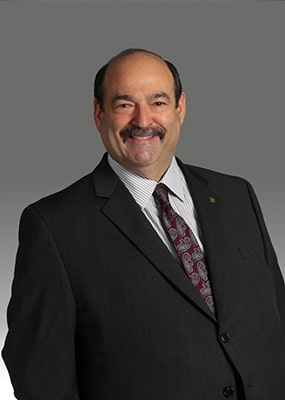
The Florida Association of Counties (FAC) has appointed Broward Commissioner Steve Geller to serve as Chair of the FAC Community & Urban Affairs Committee and Policy Leader on the FAC Finance, Tax & Administration Policy Committee. The Community & Urban Affairs Committee is tasked with developing and recommending an annual statewide legislative platform for counties based on the following areas: Affordable Housing; Growth Management; Development, Planning and Zoning; State and Regional Transportation and Strategic Intermodal System Issues. The Finance, Tax and Administration Committee oversees policies relating to the taxation and funding of local governments, administration of essential public services and accessible and accountable county government. Commissioner Geller is uniquely qualified to serve on these committees with experience as a County Commissioner (2016-Present), Florida State Senator (1998-2008) and Florida State Representative (1988-1998). Geller served as Chair on the State Community Affairs Committee and as Vice Chair and Ranking Minority Member on the Finance and Tax Committee during his 20 years in the State Legislature. His areas of expertise align with those of the Florida Association of Counties. His most recent record of accomplishment includes: Creation of Film Lauderdale that serves as the Broward County Film Commission providing incentives to create high paying jobs, increase tourism and promote Broward County. Commission approval to allow affordable housing in commercially zoned areas located along transit-oriented corridors.Broward County Apprenticeship Program that mandates apprenticeship participation requirements on County construction contracts over $5 million, increasing opportunities for high paying skilled jobs.Advocate for innovative methods for water management and environmental planning as climate change has posed significant challenges such as flooding, sea level rise and extreme temperatures. Committed to public service, Commissioner Geller currently serves as Chair of the Broward County Water Advisory Board and Chair of the South Florida Regional Planning Council. He also serves on the Executive Committee of the Florida Association of Counties and the Broward County Cultural Council. For more than 85 years, the Florida Association of Counties (FAC) has represented the diverse interests of Florida's counties, emphasizing the importance of protecting home rule - the concept that communities and their local leaders should make the decisions that...
We hope you all join us in celebrating Founding Partner Peter S. Sachs’ 50-year anniversary of practicing law in the State of Florida! Peter became a member of The Florida Bar in 1973. He and his fellow 50-Year members were honored at the 2023 Florida Bar 50-Year Member Luncheon at The Boca Raton on Friday, June 23, 2023. The special event took place during The Florida Bar Annual Convention, which was held from June 21st-24th in Boca Raton. Earlier this year, Peter also celebrated 50 years since graduating from Fordham Law School with other members of the Class of ’73, including Senior Judge Loretta Preska of the U.S. District Court for the Southern District of New York (SDNY), at their reunion in New York City. “It is difficult to comprehend that 50 years have elapsed since taking my oath as a Member of the Florida Bar. I am grateful that along the way I received guidance and mentorship from lawyers and judges that I admired as consummate and ethical professionals. Looking back, what I cherish most are the friendships that I made with other lawyers, jurists, and the many clients that I was privileged to represent. I am blessed to still be practicing law and look forward to mentoring the next generation of attorneys, including those at my law firm and two children who followed in my footsteps, one of whom is a Family Law attorney and the other who works in the legal department of The Disney Corporation.” – Peter Sachs Peter founded Sachs Sax Caplan P.L. in 1979. He is Board Certified in Condominium and Planned Development Law by The Florida Bar and through the years has handled a multitude of matters related to community associations (condominiums, cooperatives, homeowners, master and country clubs). He is considered one of the pioneers in the development of community association law and has earned a reputation as a staunch consumer rights advocate. Peter’s notable work includes obtaining significant settlements on behalf of each of the four Century Village communities and the Kings Point complex in Delray Beach. He also created and represents Kings Point Recreation Corporation, the...

Leasing a home or office can be an overwhelming process. There are many factors a prospective tenant should take into consideration before signing a lease agreement. The following are some of the more important questions that you should consider before signing a lease agreement: #1 - What utilities or amenities are included or not included in the rent cost? In order to ensure that there are no unexpected additional costs, the lease should clearly define the responsibilities of the parties. For instance, clarify which party is covering amenities like parking, utilities, cable, lawn care, storage, exterminator fees, etc. #2 - How long is this lease term? Make sure the lease term is for the timeframe you expect to stay at the premises. However, in unforeseen circumstances, you may be forced to either cut short your stay or extend your stay. One solution may be to add a provision to the lease agreement allowing you to terminate your lease early upon the payment of an early termination fee (typically 2 months of rent). Another solution may be adding an extension right (at the same or similar base rent) allowing you to extend the term of the lease by another year. #3 – Is Subletting allowed? Subletting involves renting out your space temporarily to another person, while the lease still stays in your name. This is helpful if you want to avoid breaking the lease early, or if you are not going to be in your space for extended periods of time. #4 - What is allowed when it comes to making alterations? Make sure the lease includes your ability to perform minor alterations, such as hanging items on the walls, together with such other alterations that you may desire, such as painting the interior or changing the carpeting. #5 - When is a landlord allowed to enter the premises without an invitation? Except when there is an emergency, the lease should require a landlord to give at least 24 hours’ notice of their intent to enter the premises. It would also be helpful to restrict the landlord’s ability to enter to a...

Sachs Sax Caplan, P.L. is proud to be recognized by The Florida Bar for our commitment to hiring and developing Board Certified Attorneys.